Introduction
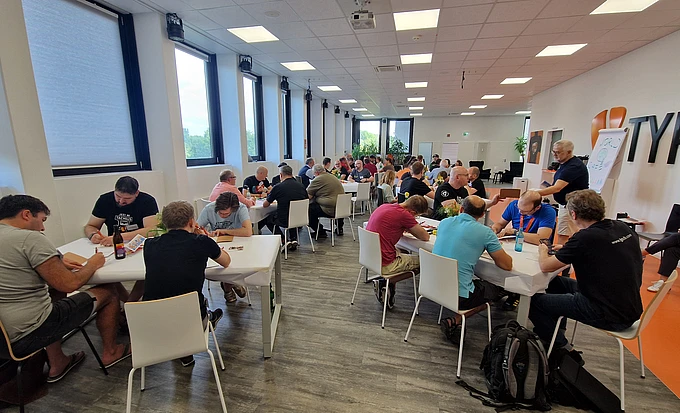
On July 13 and 14, 52 TYPO3 Association members came together at the TYPO3 Company offices in Düsseldorf, Germany, for the TYPO3 Dialogue Days.
The two-day event brought together individuals, contributors, agency representatives, and elected bodies to discuss how TYPO3 can remain independent, competitive, sustainable, and rooted in its open-source community.
From the outset, the Dialogue Days were not a decision-making body and were not intended to produce a final strategy or binding agreement. The event was part of a broader process of listening, gathering feedback, and aligning existing considerations with the perspectives represented across the TYPO3 ecosystem.
Why the Dialogue Days Took Place
TYPO3 is facing questions that affect the future of the entire project: how responsibilities should be distributed, how decisions should be made, how the project can be funded sustainably, and how open-source principles can be combined with the need to compete in a changing market.
The TYPO3 Association and TYPO3 Company had already been working on a number of these questions before the event. The purpose of the Dialogue Days was to create space to examine those considerations alongside the experiences, concerns, and ideas of TYPO3 Association members.
The Dialogue Days were not the only opportunity to participate in this process. Further discussion and feedback will continue through the upcoming TYPO3 Developer Days (6–8 August in Karlsruhe, Germany), through personal interaction, and the General Assembly, which will see significant changes starting in 2027.
How the Participants Worked
The event was facilitated by Wolfgang Fiebig and Lena Peller using a range of formats, including exploration of various stakeholder perspectives, Appreciative Inquiry, and a World Café.
The first day focused on listening, openly addressing concerns, and examining the proposals and challenges presented by the TYPO3 Association and TYPO3 Company. The discussion was at times intense, particularly around the format of the event, the preparation materials, governance proposals, and the future relationship between community-driven and commercial development.
During the Appreciative Inquiry, participants worked in groups of two, then four, and finally eight. The groups discussed what emerged from one-on-one conversations and presented their findings to the full group.
On the second day, participants worked at nine World Café tables. Each table discussed four guiding questions, with participants rotating between tables while one host remained in place. The original groups then reconvened, identified the most evident results from their conversations, and presented them to the full group.
The results were clustered into five broader themes:
- Purpose
- Existence / Relevance
- Togetherness
- Ways of working
- Culture
Participants then used dots to indicate which individual points they considered most important. As the available time did not allow the group to complete a joint evaluation of the weighting, the Board will review and assess the prioritized results as part of the follow-up.
What Emerged From the Discussions
The Dialogue Days did not resolve every question, nor were they expected to. They did, however, make a number of shared priorities, differences, and open questions more visible.
Across the different formats, several themes emerged consistently:
The project needs a sustainable economic foundation.
Product relevance and community participation must be considered together.
Responsibilities and decision-making structures need to be clearer.
Transparency, trust, and respectful interaction are essential for effective collaboration.
Participants repeatedly emphasized TYPO3’s role in supporting digital sovereignty and its importance for agencies, enterprises, small and medium businesses, public-sector organizations, and the wider open-source ecosystem.
The discussions also highlighted a close connection between participation and responsibility. Members want meaningful opportunities to contribute, but participation also requires ownership and a willingness to share the work involved (see section below).
At the same time, several questions remain open:
How should responsibilities be distributed across the Association, Company, teams, and contributors?
How can participation be structured without slowing down necessary decisions?
How should TYPO3 balance commercial requirements with open-source development?
How can transparency and coordination be improved across the ecosystem?
Governance: Clearer Responsibilities and Meaningful Participation
One of the central discussions concerned how TYPO3 can combine meaningful participation with clear responsibility and the ability to act.
Participants discussed a new governance proposal that introduces Units as a structural model for reorganizing the current team structure (see presentation). The proposal is intended to address existing coordination challenges and create clearer responsibilities without removing opportunities for participation.
The discussion focused in particular on:
The distribution of responsibilities between elected bodies, teams/units, and contributors.
The relationship between participation and accountability.
The ability of responsible bodies to make and implement decisions.
The role of the General Assembly in approving formal structural changes.
The need for greater transparency throughout the process.
The discussions also made clear that the TYPO3 Association Board cannot carry all resulting tasks alone. A functioning governance model will therefore depend not only on formal structures, but also on members and teams taking ownership of defined areas of work.
The board acknowledged that relevant materials had not been shared in advance of the Dialogue Days. This was identified as an important learning for the further governance process.
The governance proposal remains a working draft. Any changes to the Association’s bylaws or formal structures will require the appropriate statutory process and approval by the General Assembly.
A Step in an Ongoing Process
The Dialogue Days demonstrated both the intensity of concerns surrounding TYPO3’s future and participants' willingness to engage with them.
The two days also showed that constructive collaboration requires more than creating opportunities to speak. It depends on transparency, preparation, mutual respect, a willingness to listen, and a shared readiness to take responsibility for the work ahead.
As one participant reflected at the end of the event:
“We may only know months from now how to assess the outcome.”
The work now continues in the responsible bodies, teams, and future dialogue formats.